
For Asian American Heritage Month 2026, ACL Spokane invited artist Lain Bundalian to create a piece that reflects this year’s theme, Be the Bridge. What emerged is not only a striking visual work, but also a thoughtful meditation on history, migration, place, and the many ways identity is shaped across time.
Lain’s piece begins with the archives.
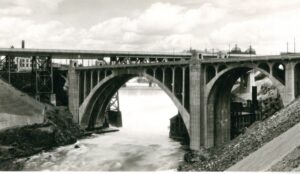
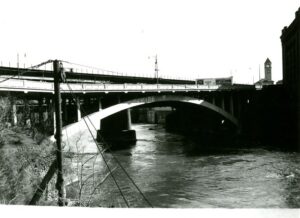
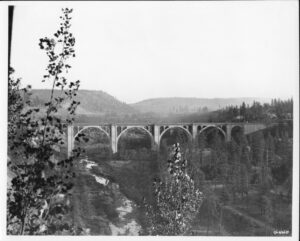
Rooted in archival photographs drawn from the Spokane Public Library’s Inland Northwest Special Collections, the work incorporates historic photographs of Spokane’s bridges and other local imagery as its foundation. These archival materials do more than document the past. They hold traces of the city’s memory — its structures, its crossings, its landscapes, and the layered histories that continue to shape how we move through this place today.
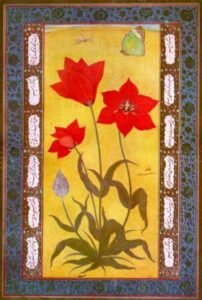
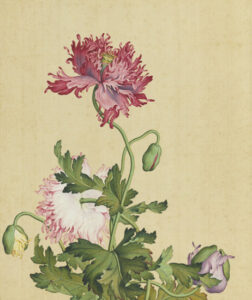
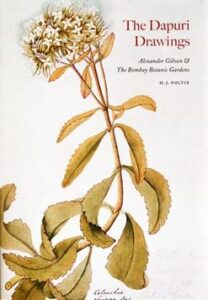
Layered within these archival images will be botanical illustrations of flora symbolically connected to the Asian diaspora. By overlaying these elements onto photographs of the regional landscape, the designs will create a visual dialogue between heritage and placehood. This juxtaposition crosses diasporic roots with the physical environment of the Inland Northwest, reflecting themes of migration, belonging, and cultural pride.
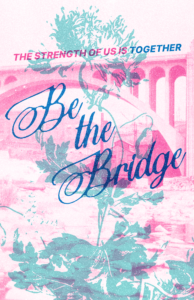
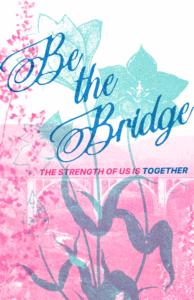
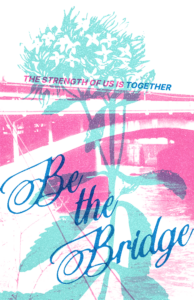
The “Be the Bridge” artwork poster will be reproduced as an 11 × 17 Risograph print, using the Inland Northwest’s only risograph machine, housed at Eastern Washington University. Often described as a modern mimeograph, risograph printing originated in Japan — a history that carries particular resonance here.
For decades, risograph has helped democratize access to printmaking. Embraced by artists, organizers, and independent publishers, it has become a vital medium for grassroots expression, civic engagement, and public dialogue. From protest posters and zines to community calls-to-action, risograph carries a visual language inseparable from public voice — immediate, reproducible, and made to circulate through community.
In the context of Be the Bridge, a work reflecting local memory, diasporic belonging, and cultural pride is brought into form through a process rooted in Japan and shaped by traditions of grassroots artmaking. The medium itself becomes a bridge — linking ancestry and place, archive and action, art and activism, memory and public voice.
Through the integration of archival imagery, typography, and symbolic botanical forms, Lain Bundalian’s work honors honor the presence and contributions of Asian Americans in the region while exploring how identity is shaped by both ancestry and place. It reminds us that connection is an active practice, that community is made through crossing toward one another, and that the strength of us is together.